
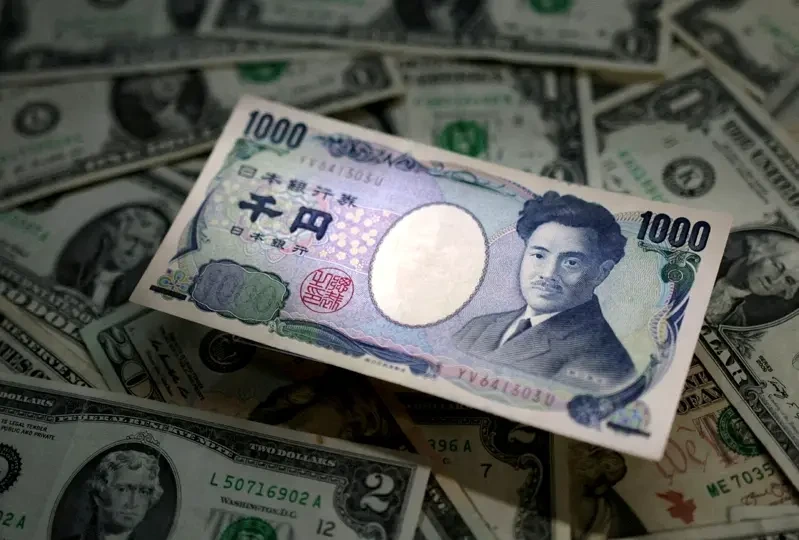
The Japanese yen faces the risk of significant volatility and further depreciation this week. Japan is observing a three-day holiday period from Monday (the 21st) through Wednesday, resulting in the closure of the Japanese stock market and expectedly lower liquidity in the foreign exchange market. Additionally, investor disappointment over the Bank of Japan’s (BOJ) failure to provide clearer guidance regarding the pace of future interest rate hikes could place the yen under pressure.
Japan began a five-day holiday period last Saturday (the 19th); with Respect for the Aged Day, a national holiday, and the Autumnal Equinox Day falling between Monday and Wednesday, the Japanese stock market will be closed for three consecutive days. While the Tokyo foreign exchange market typically maintains basic operations and quote dissemination, market liquidity and trading volumes will drop significantly as most local banks and businesses are closed for the holidays.
Yen Plunges Over 2% Last Week; Officials Initiate “Rate Check” to Stem Rapid Depreciation
According to Bloomberg, the yen traded at 157.06 per dollar in early trading today, down 0.11%, following a 1.3% drop last Friday—a day when two Bank of Japan (BOJ) board members voted against an interest rate hike. Reports subsequently emerged that Japanese officials had requested market participants to conduct a “rate check”—a move often seen as a precursor to potential official intervention to buy the yen—though the currency’s decline narrowed only slightly. The yen depreciated by more than 2% last week, marking its largest weekly drop in nearly a year.
James Reilly, a senior markets economist at Capital Economics, stated in a report: “Just as with most recent instances where the yen strengthened ahead of BOJ meetings, the Bank of Japan has once again halted the rally.” He added, “It is reasonable to say that any substantial strengthening of the yen against the dollar will depend on factors originating in the US.”
Reports of the “rate check” also highlight the risk that Japanese authorities might intervene again to prevent further yen weakness; such intervention could trigger sharp price volatility and cause losses for traders. With Japan on holiday until Wednesday, market liquidity is expected to be thin, which could amplify the impact of any official intervention measures. A similar scenario played out during the “Golden Week” holidays in late April and early May, when Japanese authorities intervened after the yen breached the 160-per-dollar mark.
Mixed Signals on BOJ Rate Hikes; Experts: US Factors Key to Yen Strengthening
The most recent round of yen intervention began in late July, when the US and Japan acted in concert, driving the yen up by more than 6%. Although the yen’s rally peaked at 152.89 per dollar on September 8, some investors maintained a relatively optimistic view of the currency right up until last week. Joey Chew, Head of Asian FX Research at HSBC, stated in a report: “We had been considering whether the USD/JPY exchange rate was at a turning point. We now assess that recent events—including joint intervention and a second rate hike within just three months—will, at best, stabilize the USD/JPY exchange rate but are insufficient to trigger a trend of depreciation.”